Back
Creative Direction
Indomie: a content system for a category leader
What it takes to run daily content for the brand whose name became the word for instant noodles.
What I did: Built the social look and feel, the content system, and the talent direction for Indomie as Creative Director on the Poke Studios account.
Outcome: Creative direction and the social content system for Indomie at Poke Studios. A daily feed held across two sub-brands, and the client kept the agency on retainer.
Scope: Art direction, content buckets, design system, motion, shoots, and influencer selection, across social, ATL, BTL, and TV.
CONTEXT
Indomie is not a brand in the instant noodle category in Nigeria. It is the category. The name does the work a generic word usually does, the way people reach for it to mean any instant noodle at all. That kind of dominance is an asset and a trap. When you are the default, the job stops being awareness and becomes something harder to hold, which is staying wanted.
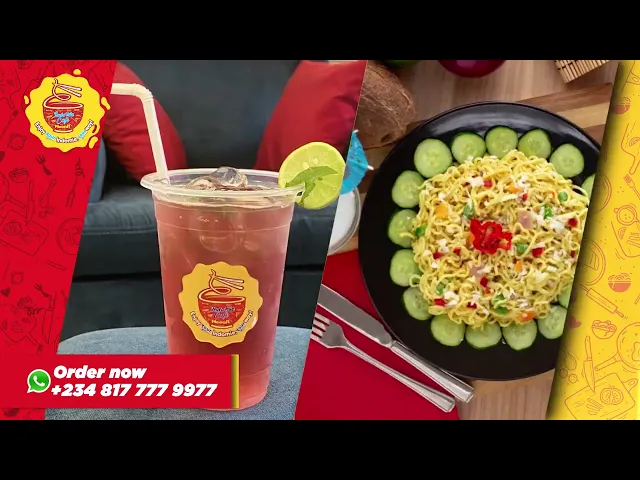
Social is where that fight happens now. It is where the younger half of the market spends its attention, where challenger brands move fast and cheap, and where a market leader can quietly start to look tired without a single bad quarter to point at. Indomie needed to show up every day across two expressions of the brand. Regular, the everyday staple in almost every Nigerian kitchen. And Indomie Cafe, the sub-brand, which carried its own positioning and could not simply be treated as Regular in different packaging.
PROBLEM
The brief was straightforward on paper. Keep the feed alive. Always-on content, social-ready, consistent posting across Instagram and Facebook, feeding both the daily calendar and the larger campaign pushes.
The real problem sat underneath it. A brand this size does not lose on any one post. It loses slowly, through drift. High volume across many formats and two sub-brands, handled by many hands, is exactly the condition under which a feed fragments. The visuals stop agreeing with each other and the brand starts looking like five brands. For a category leader, that erosion of coherence is the real risk, and it is a directing problem long before it is a design problem.
ROLE
I led creative direction on the Indomie account at Poke Studios. I came up through the work, starting as a multimedia art director paired with a copywriter, and grew into the creative director seat running a team of strategists, art directors, and copywriters. I reported to the account lead and liaised directly with the client's marketing team. Beyond the social calendar, I led campaign teams across channels, including television. I owned the concepts, art direction, copy direction, design, motion, and the shoots, and the work was collaborative by design, since the seat is about directing a team rather than doing everything alone.
APPROACH
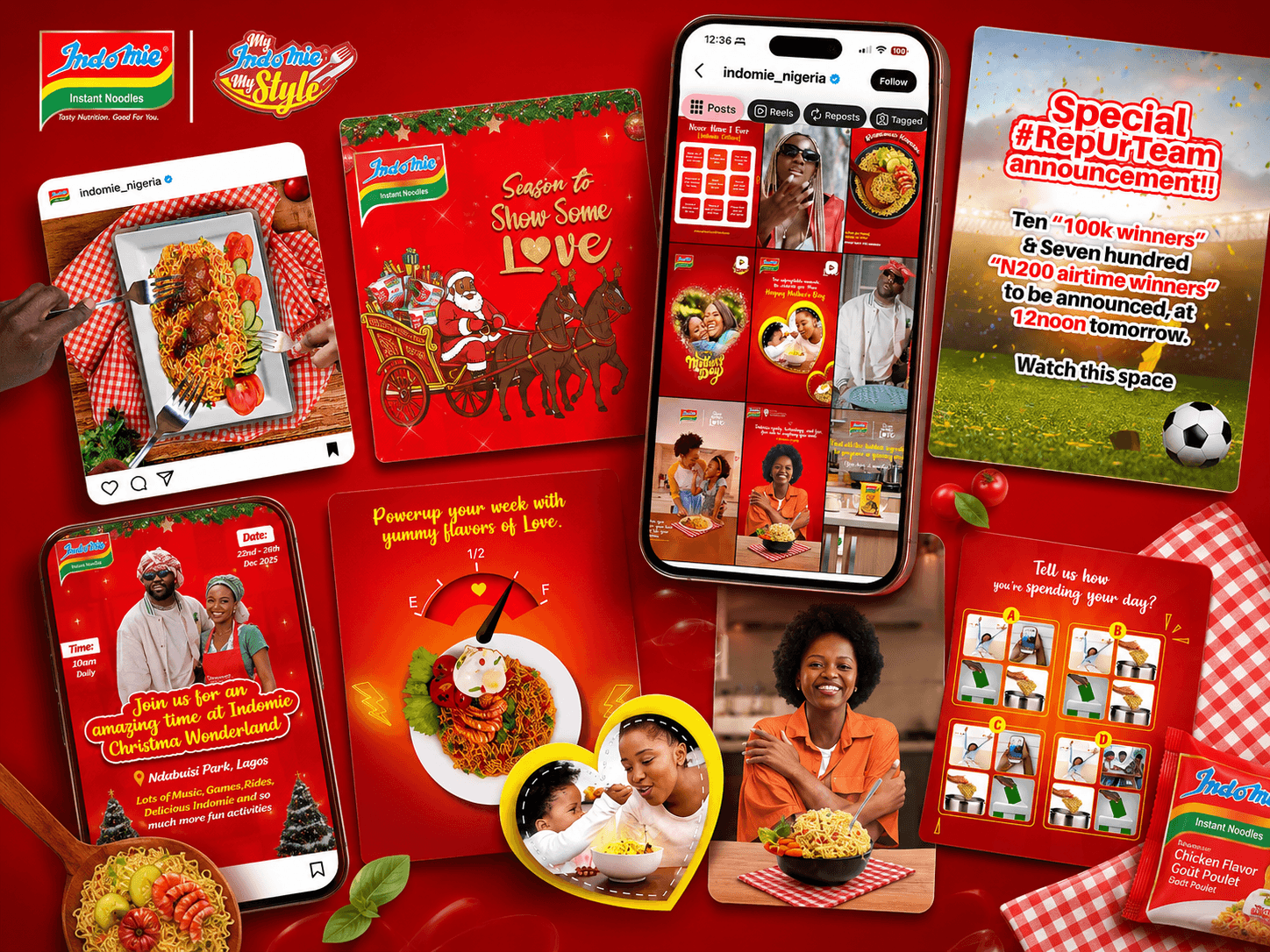
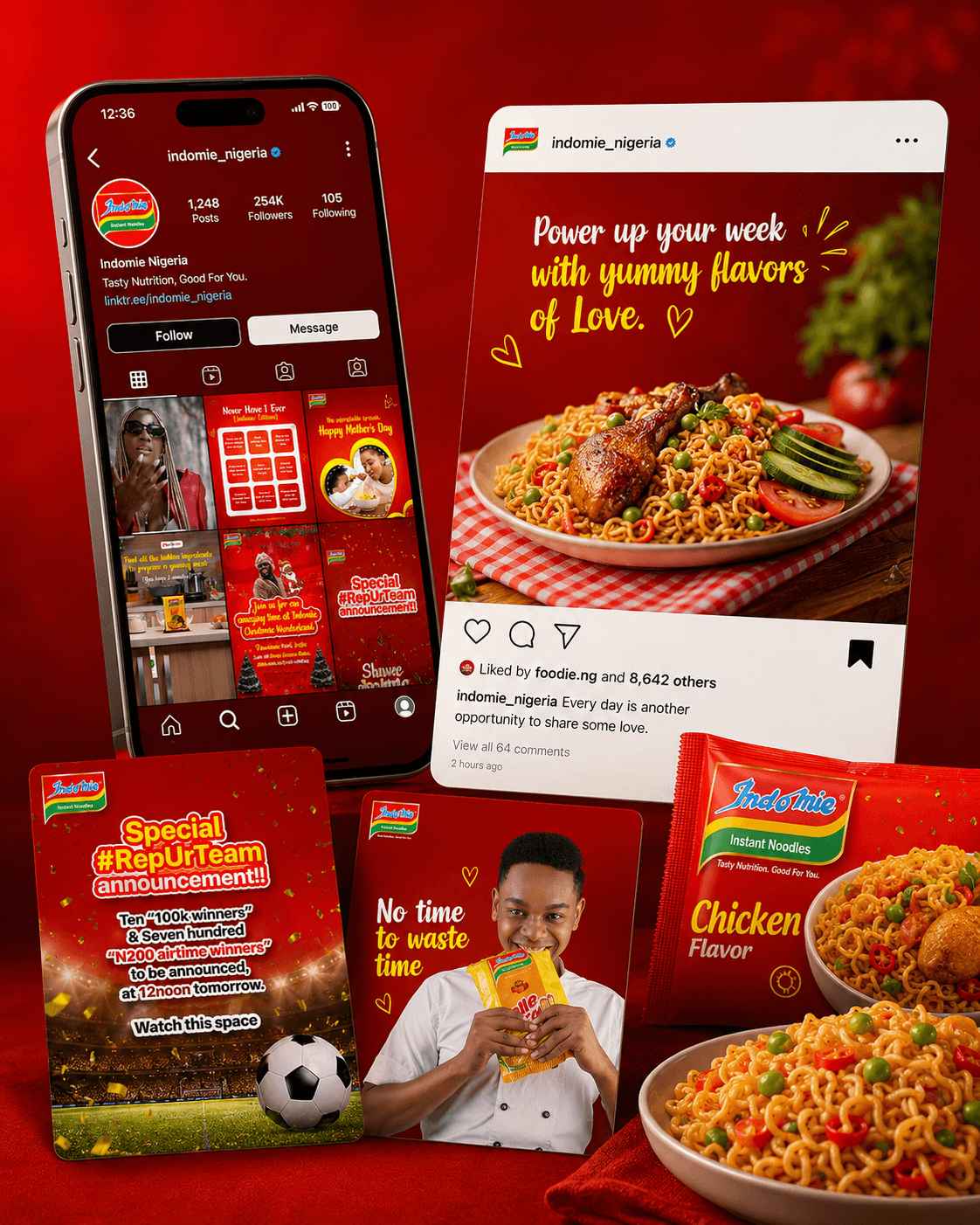
The first decision was to stop thinking in posts and start thinking in a system. A stream of clever one-offs cannot hold a brand together at this cadence. What holds is a defined look and feel, and I built Indomie's. The social visual signature, the way a post read as Indomie before anyone took in a single word, was mine to set. From there the work became less about individual executions and more about the rules underneath them.
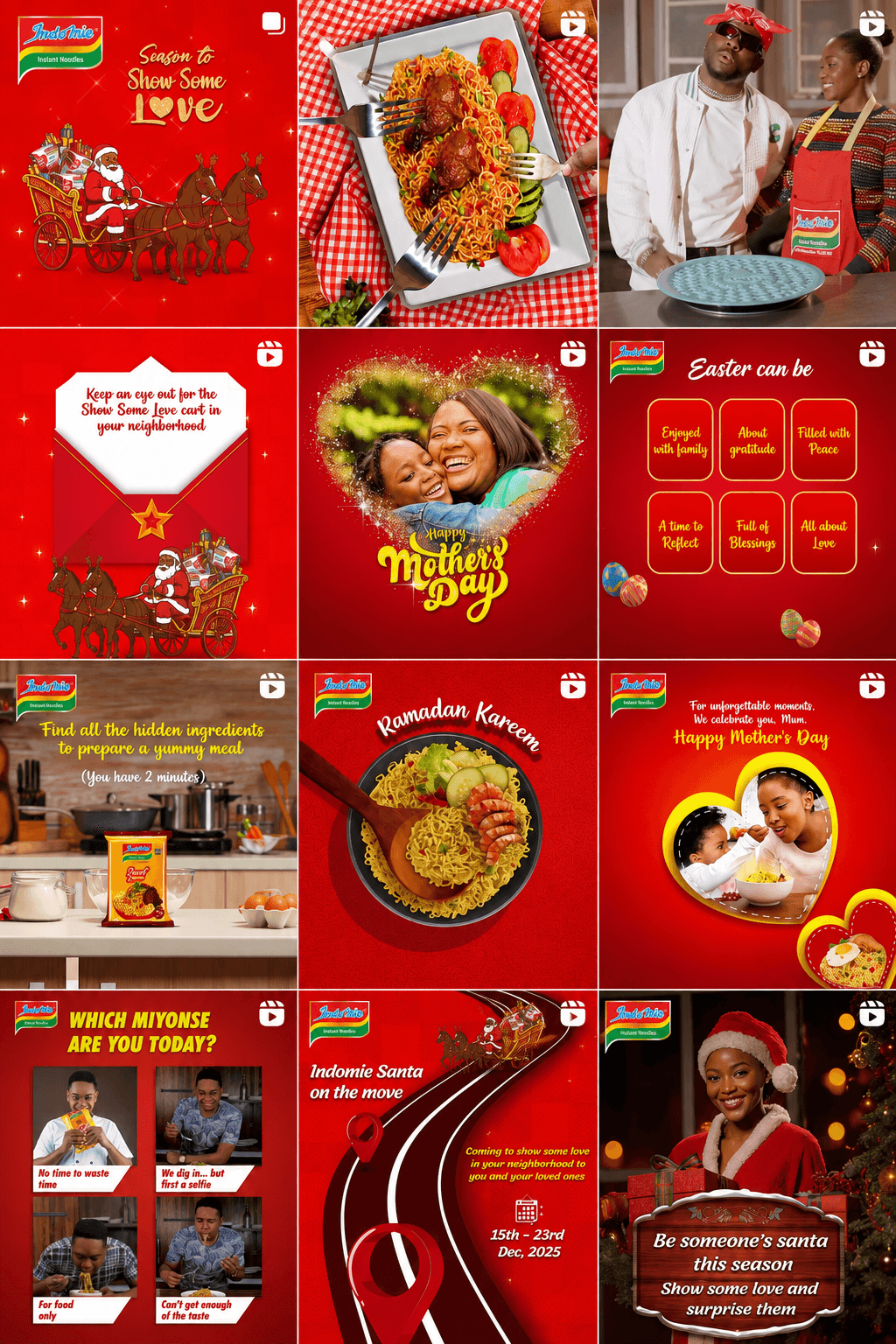
That meant authoring the architecture, not only the art. I built the content buckets, the recurring types of posting that gave the calendar a shape instead of a scramble. I set the rules that kept everything in agreement: where the logo sat, what led each frame, what went where on every layout. Rules like that are what let a team produce daily without the feed slowly turning into five different brands over a month.

The two-sub-brand question was the sharpest part of it. Regular and Indomie Cafe had to share one feed without either losing its positioning. Regular is the everyday mass staple everyone already has a memory of. Cafe is the sub-brand, with its own values, and it could not be treated as Regular in different packaging. The discipline was building genuine synergy between them, a system they both lived inside, while protecting what made each one distinct.
Talent was the other lever. Before any influencer or celebrity went near a campaign, the decision ran through me. I analyzed their audience data and the way they actually worked, built the deck we took into the selection meetings, and argued for who fit the brand and who did not. Choosing wrong is expensive and hard to walk back, so selection was treated as a creative decision, not a media buy. Once they were on, I directed them into the work.
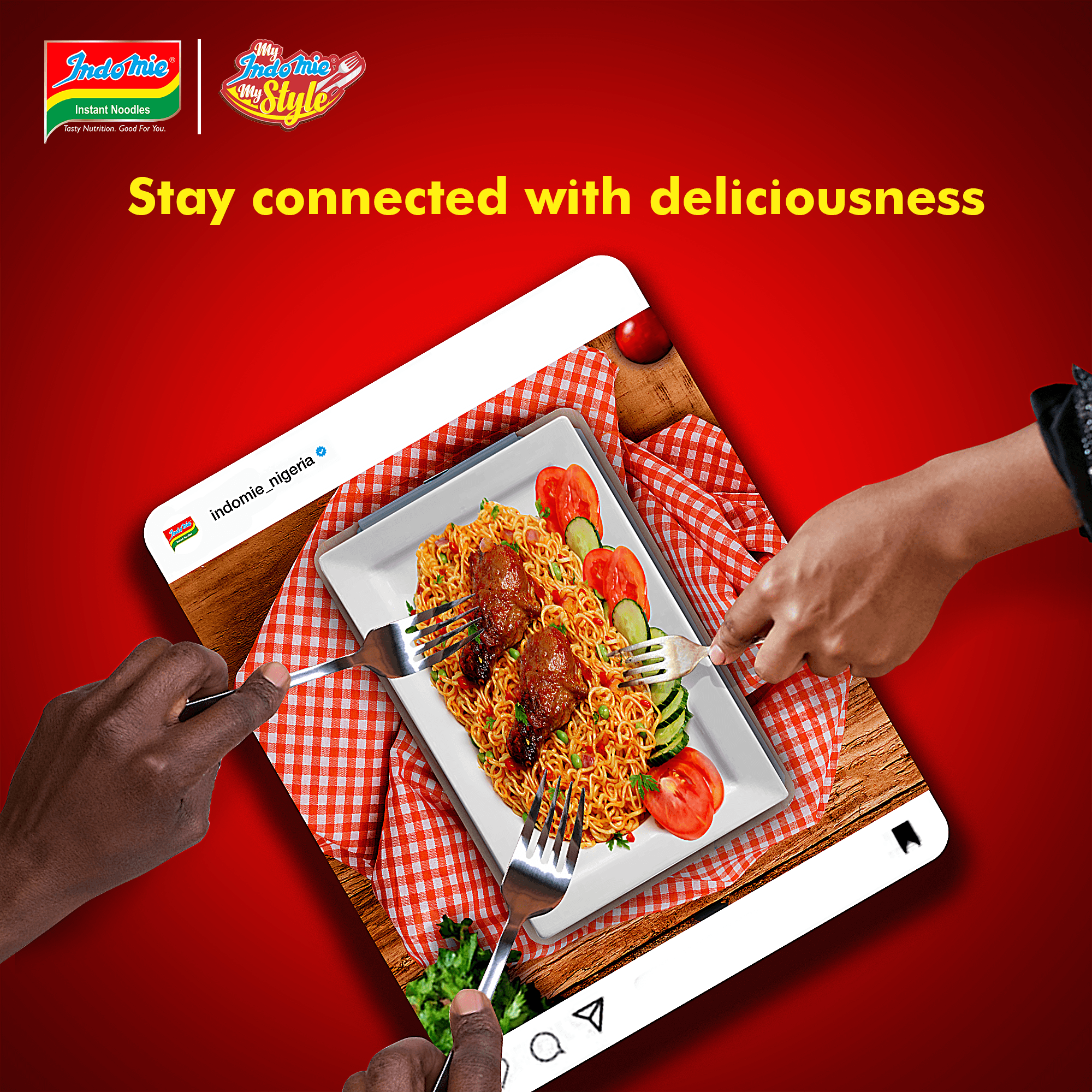
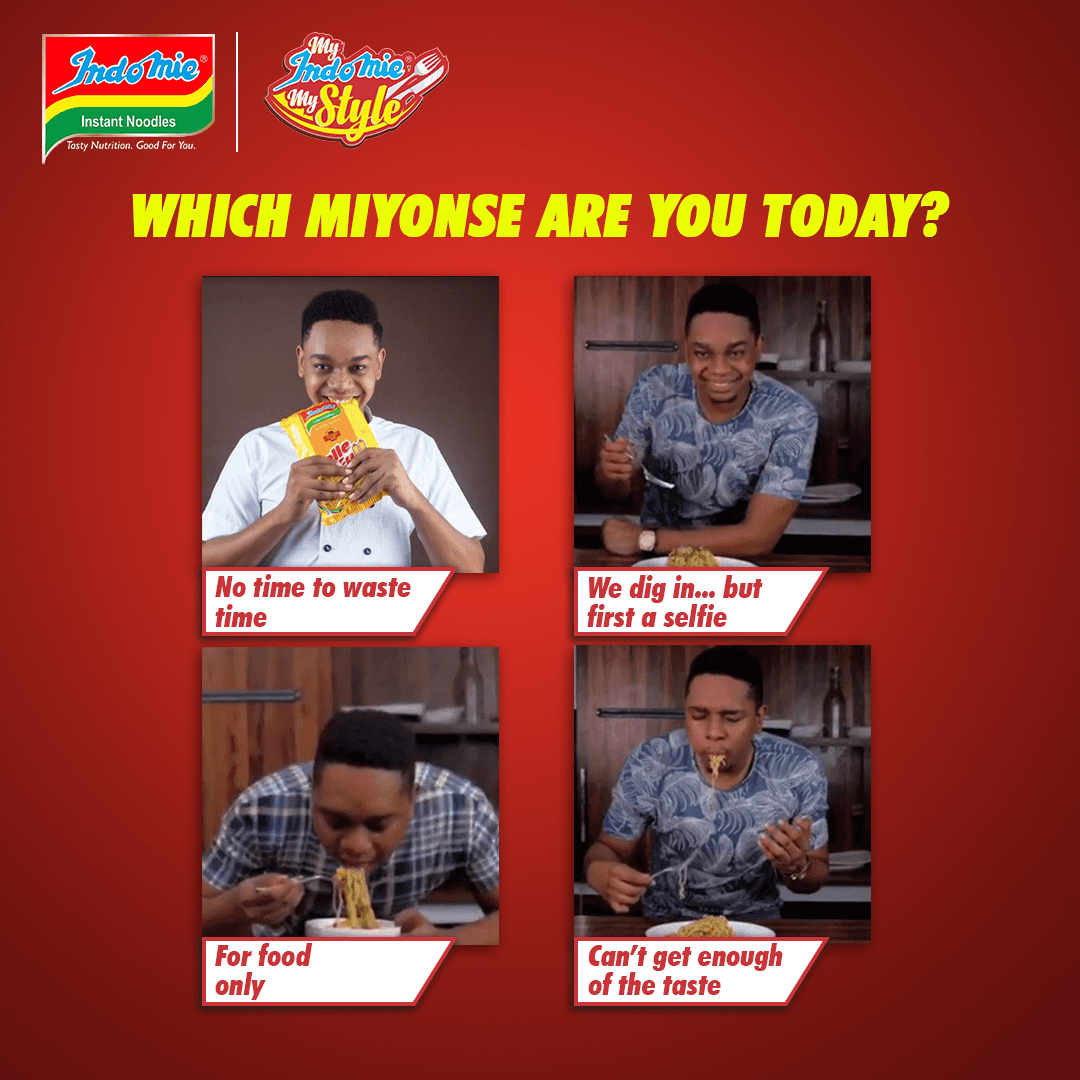
The system also had to scale across formats and channels. Static posts and carousels for the daily calendar, motion, stories, and reels for where attention was moving, and campaign sets that pushed into ATL, BTL, and television. Directing the shoots was part of the same discipline. Controlling the art direction at capture meant the raw material was on-brand before anyone designed a thing, and the review gate at the other end made sure nothing left the building off-system.
OUTCOME
The feed held. Across two sub-brands, a full slate of formats, and a high posting cadence, the work stayed coherent enough that the brand read as itself every day, which was the entire point. Engagement moved in the right direction, and internally the work landed well with both the agency and the client's marketing team.
The outcome that matters most in this business is also the simplest. The client kept the agency on retainer. For a major FMCG account, retention is the real verdict. It is the client deciding the work is worth keeping in place month after month, which is harder to earn than any single campaign win.
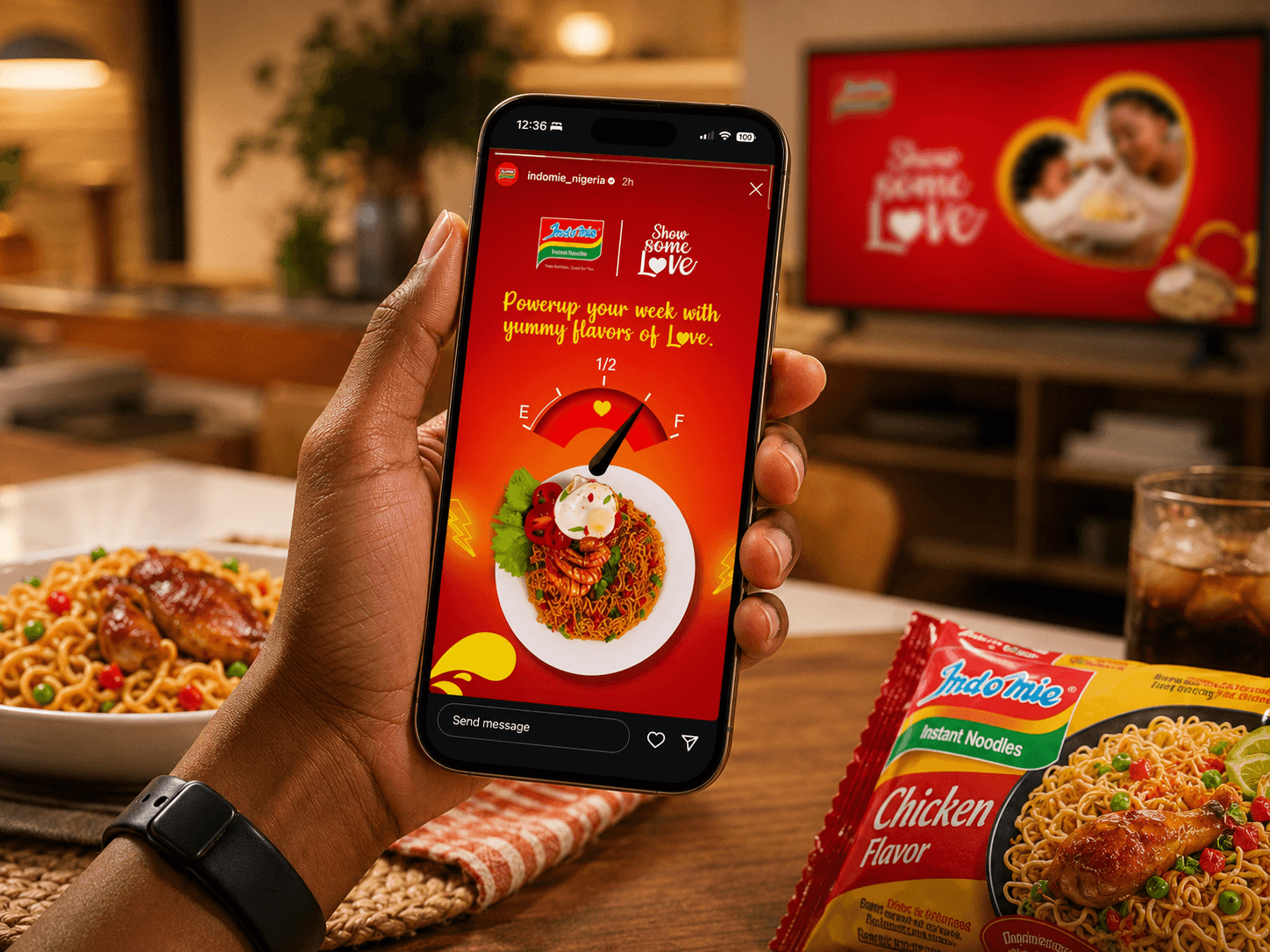
This is what running a category leader's content actually demands. Not a feed full of ideas, but a brand that can post every single day without ever looking like it is running low on them. I set the look that made that possible and held the line that kept it intact. At that volume, keeping a brand looking like itself is the direction job.